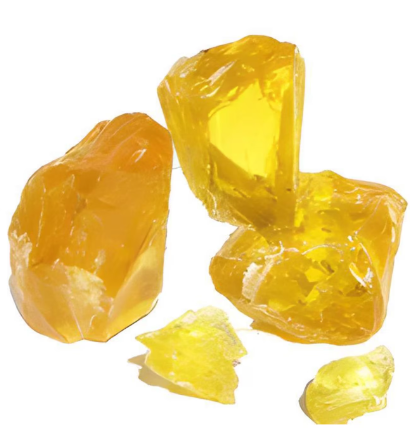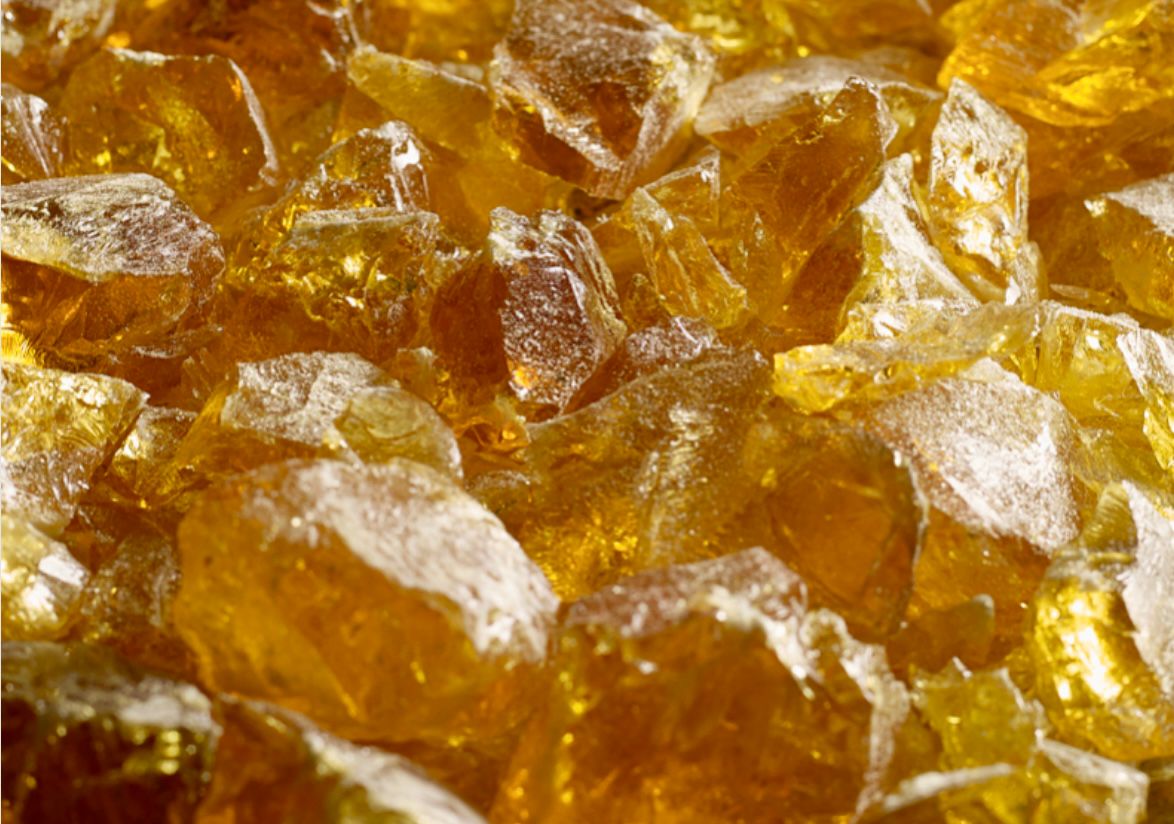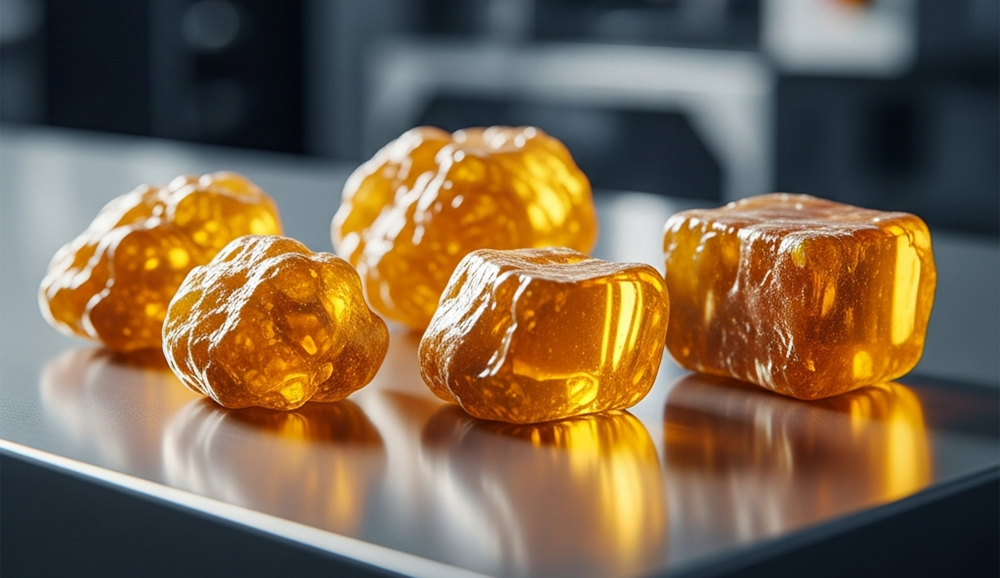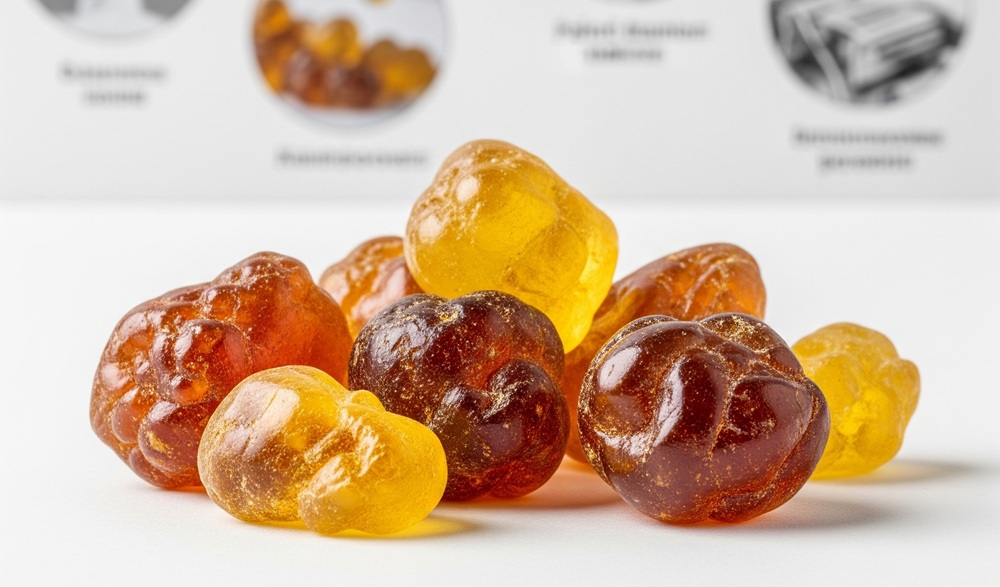
Many different chemical components are used in rubber compound production. One of them is gum rosin, obtained from pine trees, an important component that increases the homogeneity of the compound it is added to. In rubber compound production, gum rosin acts as a binder to ensure a homogeneous mixture of rubber, fillers and other additives, and its adhesive properties allow the compound to bond permanently and take the desired shape.
Gum rosin gives rubber compounds elasticity and flexibility, enabling rubber products to withstand mechanical stresses such as bending, stretching and deformation in various applications. Gum rosin also provides temperature stability in rubber compounds, allowing the rubber to retain its adhesive properties even when exposed to high temperatures
In the rubber and tire industries, resins are used for different purposes as reinforcing agents, curing agents, tackifiers and adhesives.
Reinforcing Resins: Gum rosins increase the tear resistance, initial tear resistance and abrasion resistance of the rubber in which they are used, giving products better hardness, better durability with reduced compression set, and heat, oil and solvent resistance.
Curing Resins: Designed to be heat-reactive, curing resins are used especially to improve curing performance in the vulcanization of butyl rubber compounds. They can also be used in blends of butyl rubber with nitrile, natural rubber and polychloroprene rubbers.
Today, the most widely used, cheapest and oldest rubber curing/vulcanization method is the use of sulfur-containing chemicals. Using phenolic resins as curing agents offers advantages over other methods. Curing in the presence of sulfur forms carbon-sulfur bonds in the rubber, whereas curing with phenolic resin forms carbon-carbon bonds. Carbon-carbon bonds are far more resistant to hydrolysis than carbon-sulfur bonds, especially under exposure to moisture at high temperatures. In sulfur-cured rubber, carbon-sulfur bonds begin to break down (reversion) once crosslink density reaches its maximum. In phenolic resin-cured rubbers, reversion occurs much more slowly, which makes them important in certain specialty applications.
Resins in this group are used together with halogen-containing elastomers and metal chloride catalysts. With these resins, vulcanized butyl rubbers become products that resist drying, high heat and pressure, are non-blooming and non-staining, and have high modulus values.
Tackifying Resins
Developed for use as interlayer tackifiers in the layered production of automotive tires and mechanical rubber goods requiring high levels of adhesion, these resins are compatible with synthetic and natural rubber blends.
With today's technology, increasingly high-performing synthetic rubbers are replacing natural rubber. However, the greatest strength of natural rubber, its ability to hold layers together, is not as strong in synthetic rubbers. Tackifying resins are used in rubber compounds for the production of products such as automotive tires, conveyor belts, rubber-based hoses, linings, mats, sheets, fabric-lined rubber and rubber adhesives.
Adhesive Resins
Adhesive resins are formulated to be heat-activated and synthesized for compatibility with neoprene, chloroprene and other elastomer-based adhesives. These resins give rubber-based adhesives low initial viscosity and viscosity stability. They are produced taking into account parameters such as green strength, open time and bond strength.
Soluble in solvents such as aromatic hydrocarbons, esters and ketones, these resins are used in rubber-based adhesives, upholstery, footwear, leather and automotive adhesives, wire enamel, coatings and varnishes.