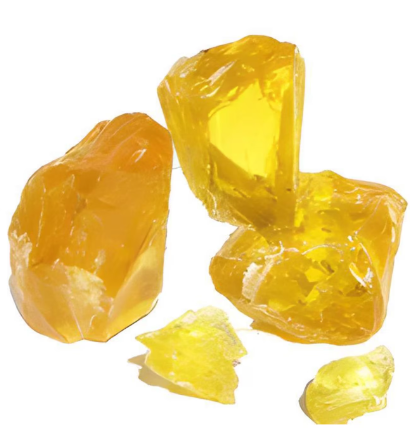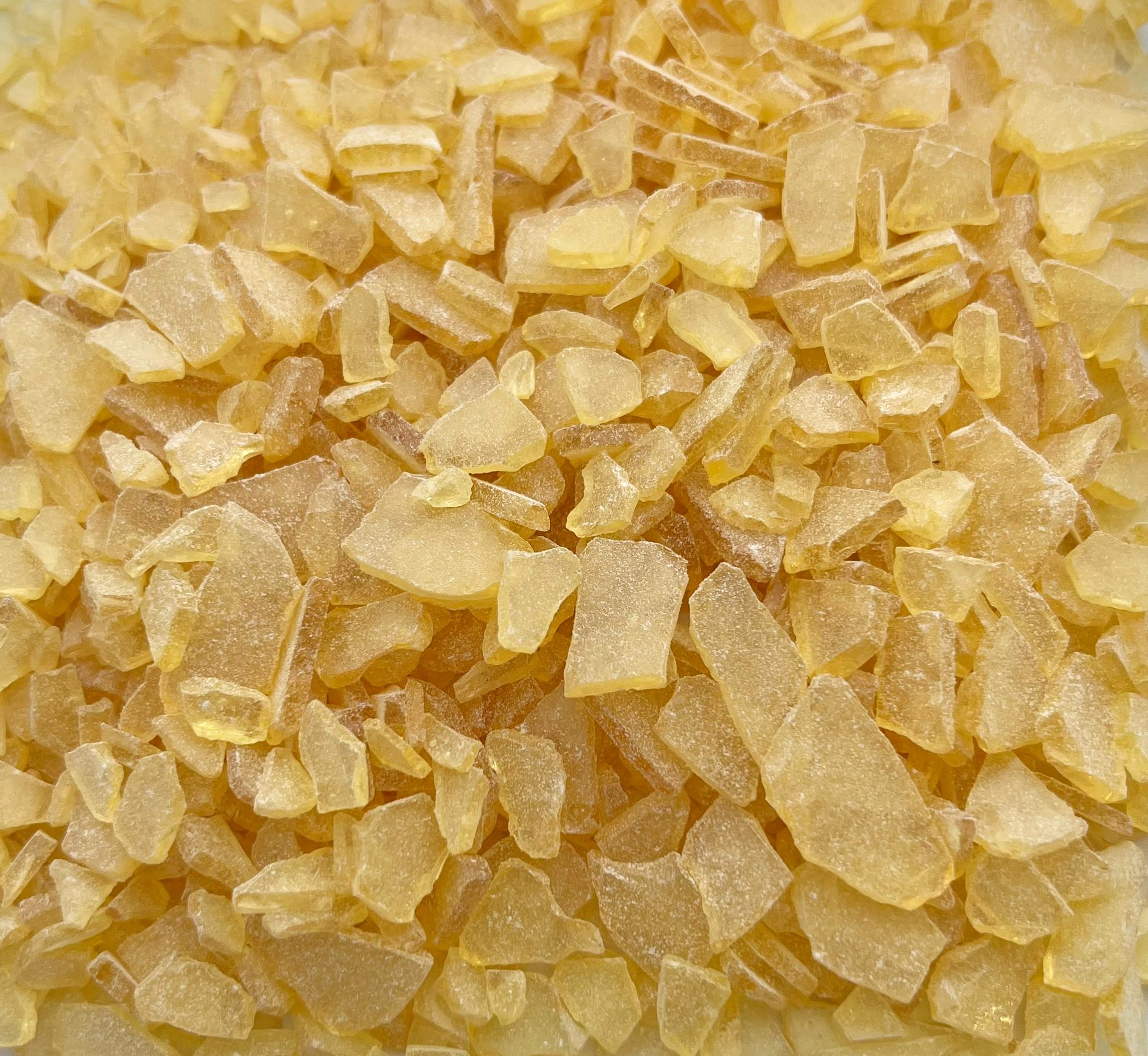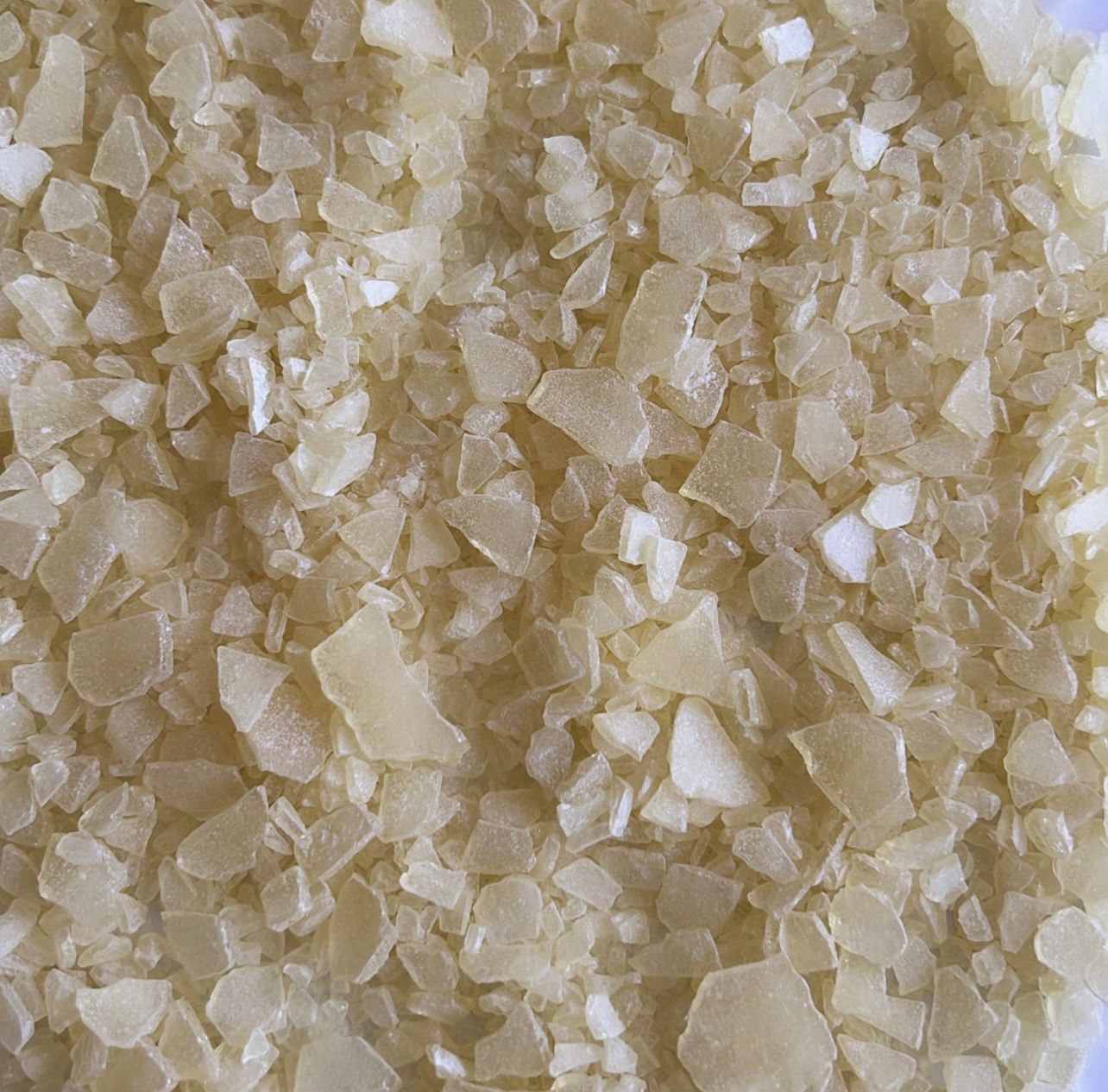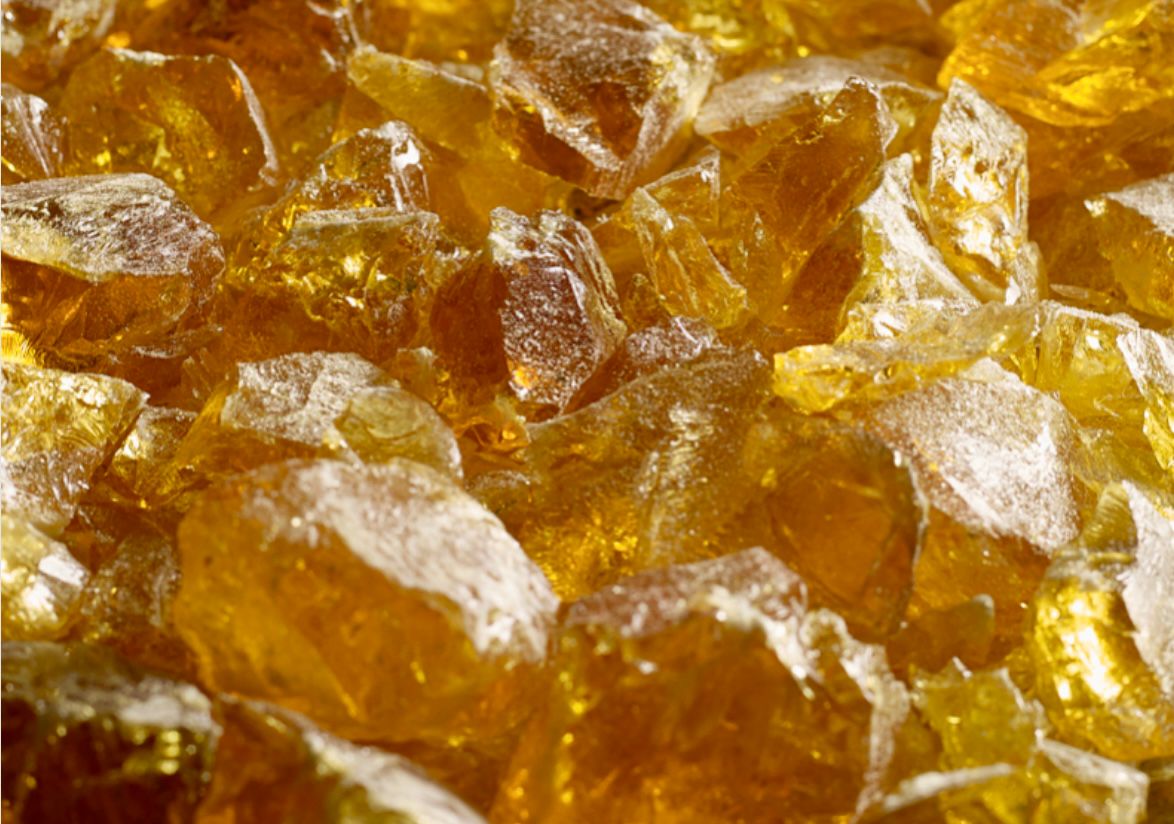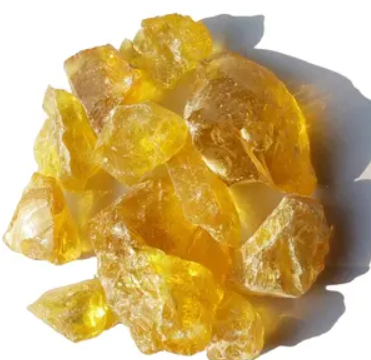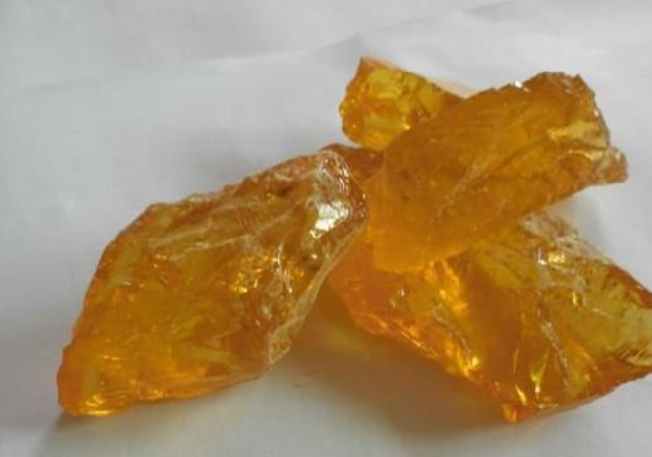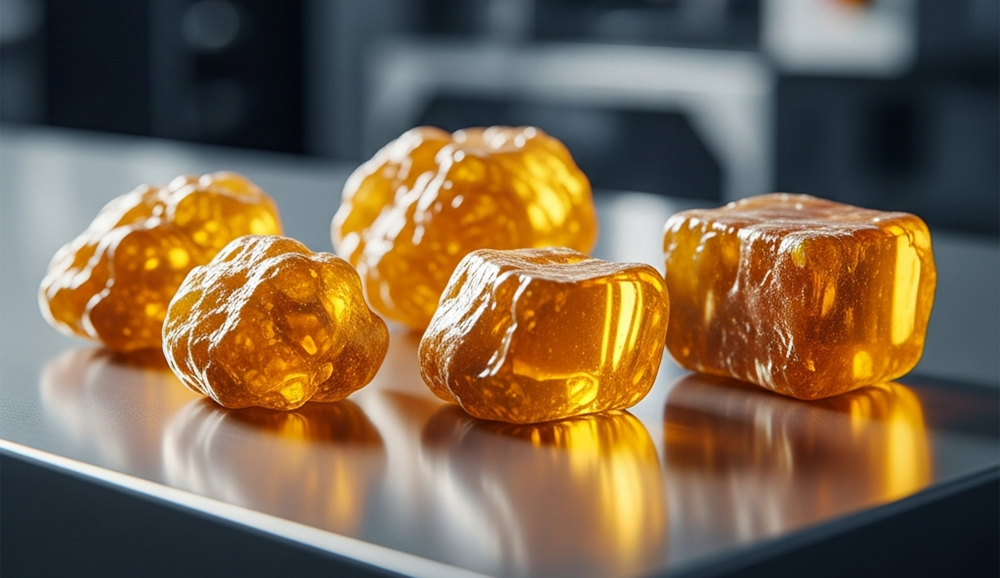
Gum rosins and rosin derivatives are important, widely used components in industrial adhesive production. Resins act as the main component of the adhesive and provide its adhesion properties.
Different types of resin are used in industrial adhesive production. Each resin type has different properties and is selected according to the application. Industrial adhesives are used in many sectors, such as furniture and wood, lamination, paper labels and packaging, foam, mattresses and upholstery, footwear, automotive, floor coverings, healthcare (adhesive bandage production), electronics, printing and food.
Resins are key factors in determining an adhesive's bonding properties. Their chemical structure and curing characteristics affect properties such as the adhesive's strength, flexibility and temperature resistance. Choosing the right resin is therefore essential to achieving the desired bonding performance.
Various additives can be used to enhance the adhesive performance of resins. These additives may serve functions such as adjusting the viscosity of resins, extending open time and increasing the flexibility of the adhesive.
USE OF RESINS IN SOLVENT-BASED ADHESIVE PRODUCTION
In solvent-based adhesive production, Gum Rosin, Modified Resins, Penta Ester Resins and Glycerol Ester Resins are components widely used across various industries. Solvent-based adhesives bond by dissolving resins such as gum rosin in solvents and then applying them to the surface.
Gum rosins, modified resins, penta ester resins and glycerol ester resins directly affect bond strength, viscosity, curing time and other performance properties in solvent-based adhesives. Penta ester resins are used in solvent-based adhesives as hardeners and curing agents, as well as to control the adhesive's viscosity and regulate its flow. Glycerol ester resins are used in solvent-based adhesives to increase tack, adjust viscosity, improve adhesion to surfaces and regulate the adhesive's flow. Glycerol ester resins also improve the adhesive's mechanical properties by increasing its elasticity and flexibility.
USE OF RESINS IN WATER-BASED ADHESIVE PRODUCTION
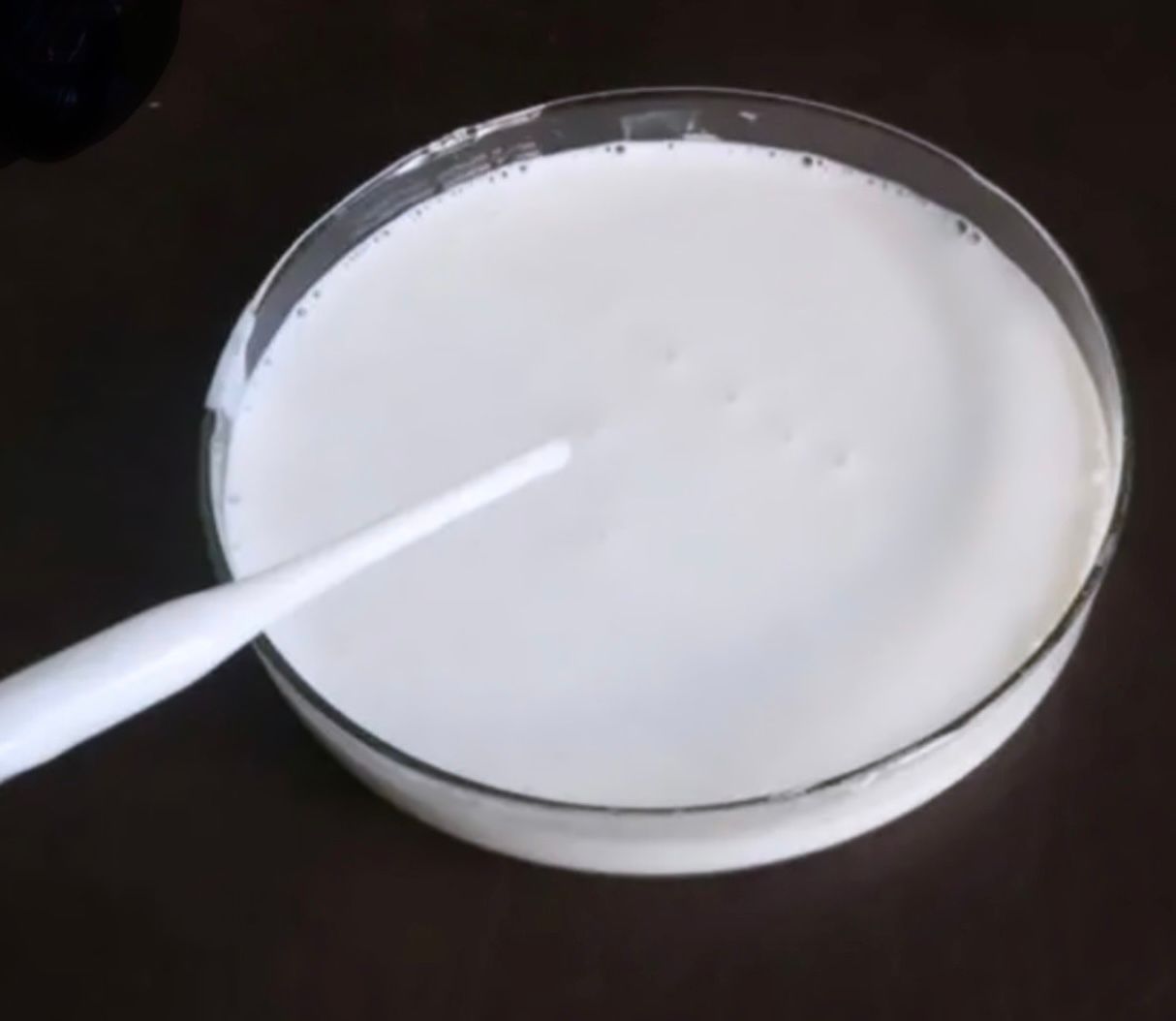
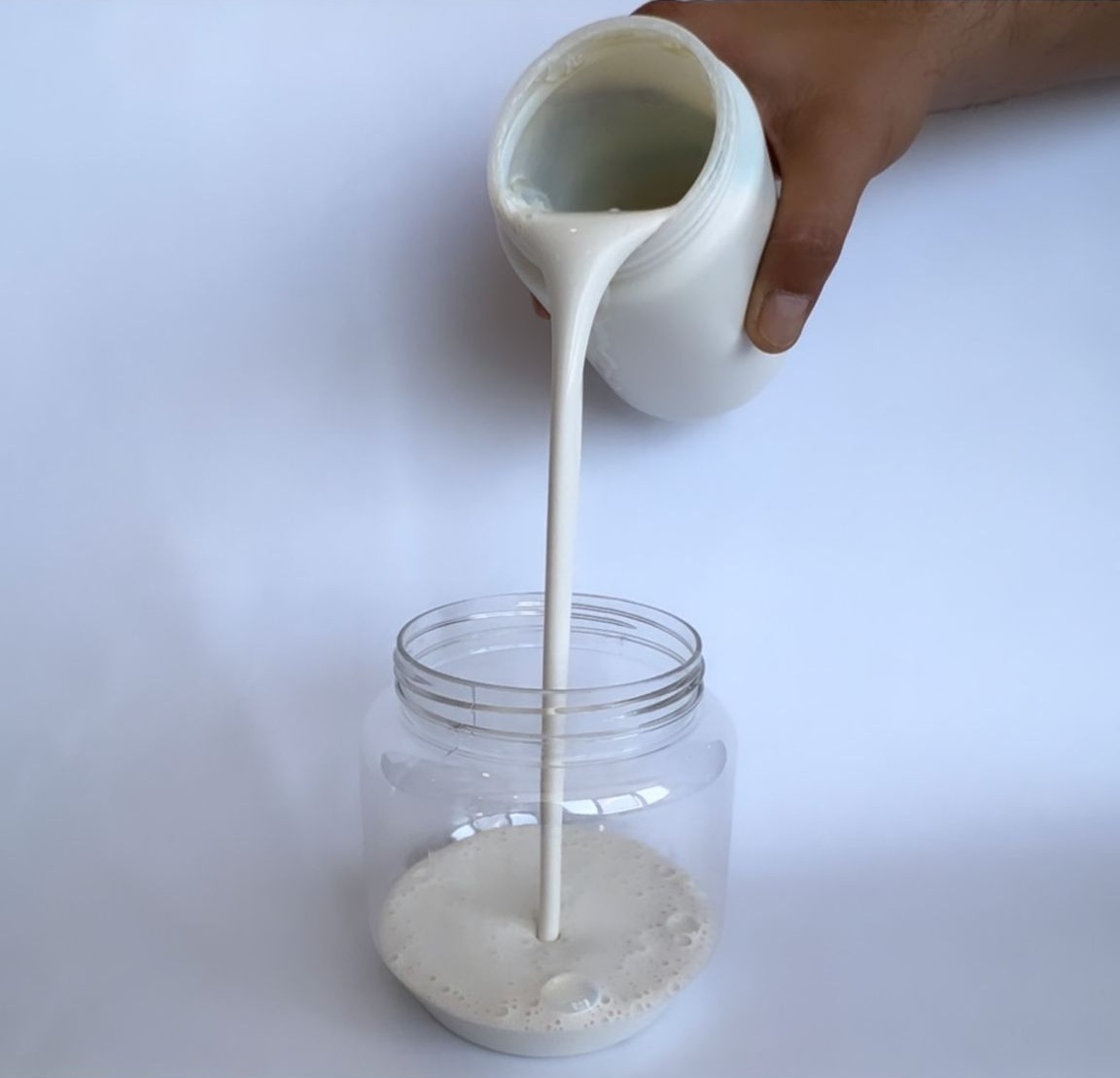
The use of Rosin Ester Dispersion Resins is important and widespread in the production of water-based adhesives. (Rosin Ester Dispersion Resins are a type of polymer dispersion obtained by modifying Gum Rosin.) They provide water-based adhesives with a range of advantages such as tack, viscosity control, emulsion stability and mechanical properties. These resins are used to stabilize polymer particles dispersed in water and to enhance adhesive performance.
Rosin ester dispersion resins are obtained by esterifying gum rosin and using an emulsion process. In this process, gum rosin is esterified by reacting it with a suitable alcohol. It then moves to the emulsion stage, where the esterified gum rosin is dispersed in water. Stabilizers and other auxiliary components are also added to achieve a homogeneous structure.
Rosin Ester Dispersion Resins are a key component in water-based adhesive formulations, used to control viscosity, increase tack and improve adhesion to surfaces. Rosin Ester Dispersion Resins increase the mechanical strength, heat resistance and water resistance of water-based adhesives.
USE OF RESINS IN HOT MELT ADHESIVE PRODUCTION
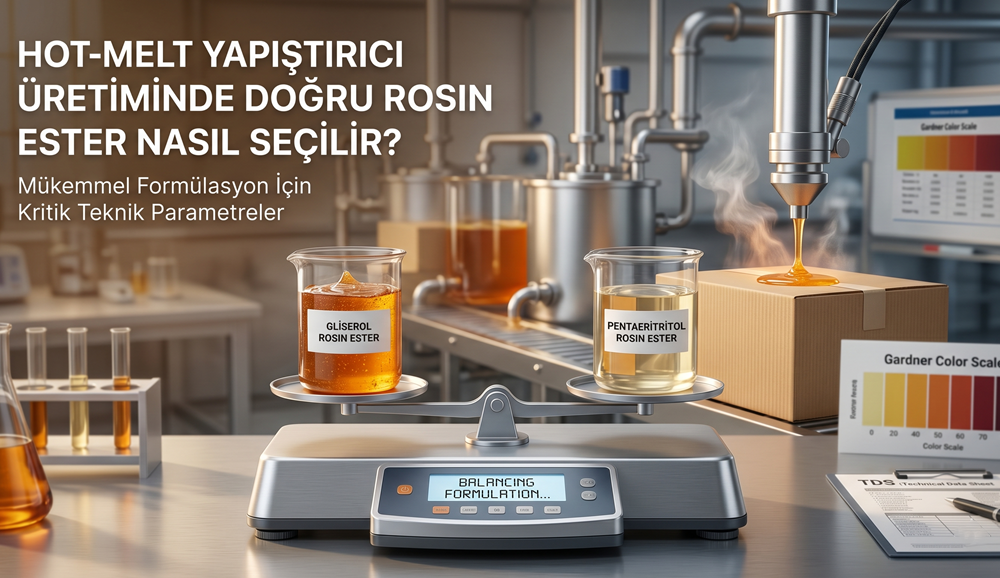
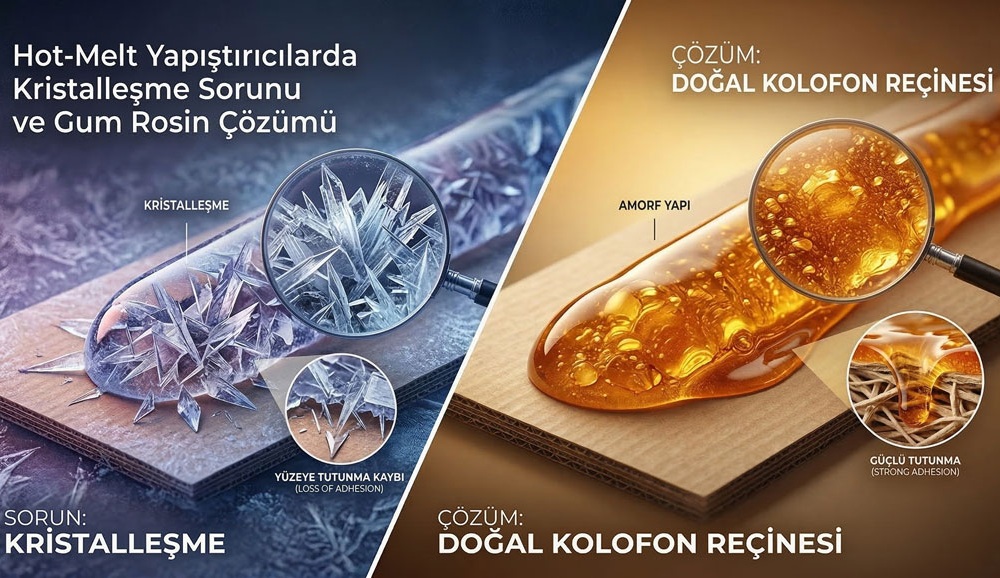
Hot melt adhesives are very widely used in industrial applications. Gum Rosin, Penta Ester and Glycerol Ester Resins (Rosin Esters) are key components in hot melt adhesive production.
In hot melt adhesive production, gum rosin and rosin esters are used for many different purposes. Gum rosin is used to increase the adhesive's viscosity and tack properties. It also gives the adhesive better adhesion and flexibility. Gum rosin provides high bond strength and increases thermal stability. Thanks to the rosins and rosin esters used, it is possible to produce adhesives with high bond strength, long open tack time and a range of viscosities. Penta Ester Resins are used in hot melt adhesives to harden the resin and increase its thermal resistance, giving the adhesive better mechanical properties and thermal stability. They can also be used to control the adhesive's viscosity and tack. Glycerol Ester Resins, meanwhile, are used to improve the adhesion properties of hot melt adhesives, adjust their viscosity and enhance their performance.
Rosin esters are also used to improve the rheological properties, spreading and bonding performance of the adhesive, as well as mechanical properties such as elasticity, hardness and tack.
Glycerol Ester Resins used in hot melt adhesive production increase the adhesive's thermal stability, thereby improving its oxidation resistance and aging properties. This makes the adhesive durable for longer.
USE OF RESINS IN PSA ADHESIVE PRODUCTION
PSA (Pressure Sensitive Adhesive) adhesives are generally used in applications such as self-adhesive labels, tapes and adhesive films. Resins are an important component in the formulation of PSA adhesives, directly affecting the adhesive's bonding properties and performance.
The resins used in PSA adhesives are generally polymers with elastomeric properties. These polymers provide the adhesive's viscosity, flexibility and bond strength. They also provide sufficient tack for the adhesive to stick easily to the surface.
Using gum rosins and rosin esters in foam adhesives enhances the bonding properties of foams and improves their durability. Resins also influence mechanical properties such as flexibility, hardness and tack.
One type of industrial adhesive is the adhesive used in the footwear industry. Gum Rosin and rosin esters are also of great importance in shoe adhesive production.
In the footwear and leather industry, adhesives are used for bonding shoe soles, joining leather parts and assembling accessories. Adhesives with properties such as flexibility, water resistance and durability are preferred.
Resins directly affect an adhesive's bond strength, elasticity, flexibility, drying time, water resistance and other properties.
USE OF RESINS IN GLUE PRODUCTION
Gum rosin is an important and widely used ingredient in glue production.
Using gum rosin in glue formulation improves the glue's adhesion properties and provides viscosity control.
Gum rosin can be used in glue production in a variety of ways, including hot melt glue, wood glue, label and tape adhesives, and furniture glues.
Gum rosin is used in glue production as a component that helps adjust factors such as adhesion properties, viscosity control and durability. The properties and performance of the glue depend on the quality, type and amount of gum rosin used.